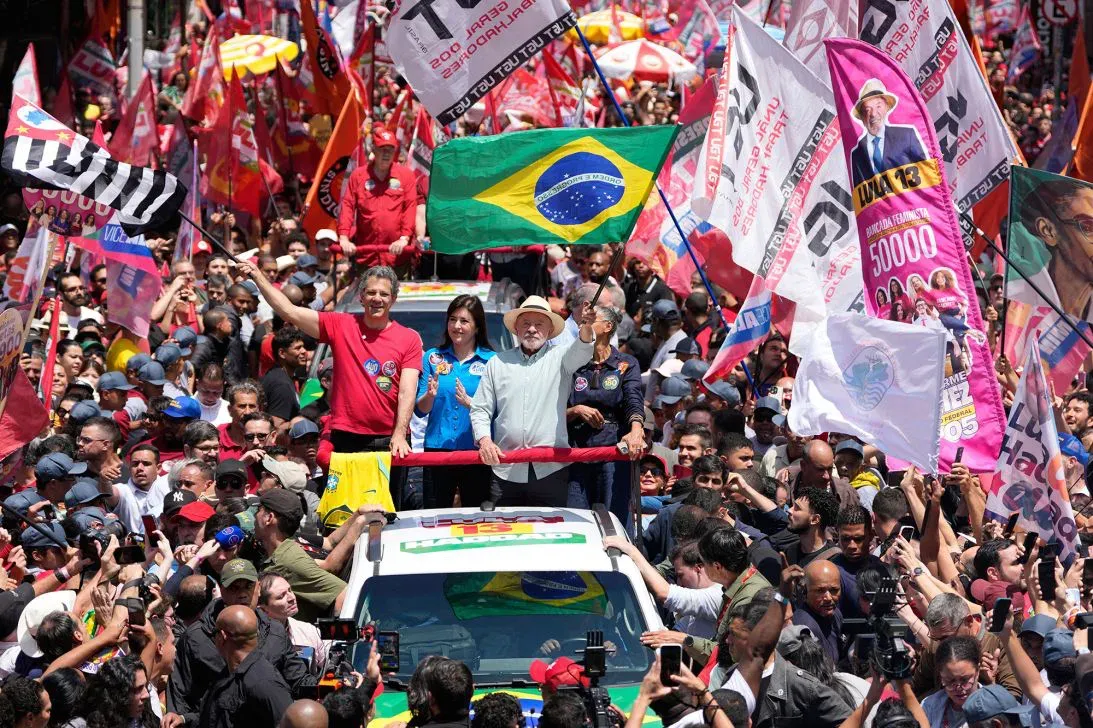
Lula Faces Tough Election Battle Amid Corruption Scandals
Brazilian President Luiz Inácio Lula da Silva is preparing for one of the toughest political battles of his career as he faces right-wing senator Flávio Bolsonaro in Sunday’s presidential runoff, amid corruption investigations, economic pressures and growing political polarization.
Lula, who returned to the presidency in 2023 after a remarkable political comeback, is seeking another term at a time when Brazil’s conservative movement remains influential and his own political legacy faces renewed scrutiny.
The nearly 81-year-old president is heading into the final round after finishing behind Bolsonaro in the first round of voting in early October. Bolsonaro secured 47.03% of the vote, compared with Lula’s 45.16%, leaving the contest exceptionally close.
Opinion polls suggest the candidates remain neck and neck, with voters divided over the country’s economic future, public security and international relations.
For Lula, the election represents another test of the political resilience that has defined his career, from his rise as a working-class union leader to his imprisonment and eventual return to the country’s highest office.
From factory worker to president
Born in 1945 into a poor family in the northeastern state of Pernambuco, Lula was the seventh of eight children. His family moved to southeastern Brazil when he was seven in search of better opportunities.
As a young man, he worked shining shoes before becoming a metalworker in the industrial outskirts of São Paulo, where he began developing the political connections that would shape his future.
In 1964, a workplace accident cost him part of his left little finger, a physical mark that later became a symbol of his working-class identity.
Lula rose to prominence during the 1970s as a union leader, organising metalworkers and addressing large crowds during the final years of Brazil’s military dictatorship. In 1980, he was arrested for 31 days under the National Security Law following a strike.
Ricardo Kotscho, a veteran Brazilian journalist who later served as Lula’s press secretary, first met him in 1978 while covering his rise in the labour movement.
Kotscho described Lula as humorous, mischievous and stubborn, but also capable of adapting his approach to achieve political goals.
As a union leader, Lula learned to negotiate with workers, business owners and government officials. Although he initially believed union leaders should stay out of politics, he helped establish the Workers’ Party, known as the PT, in 1980.
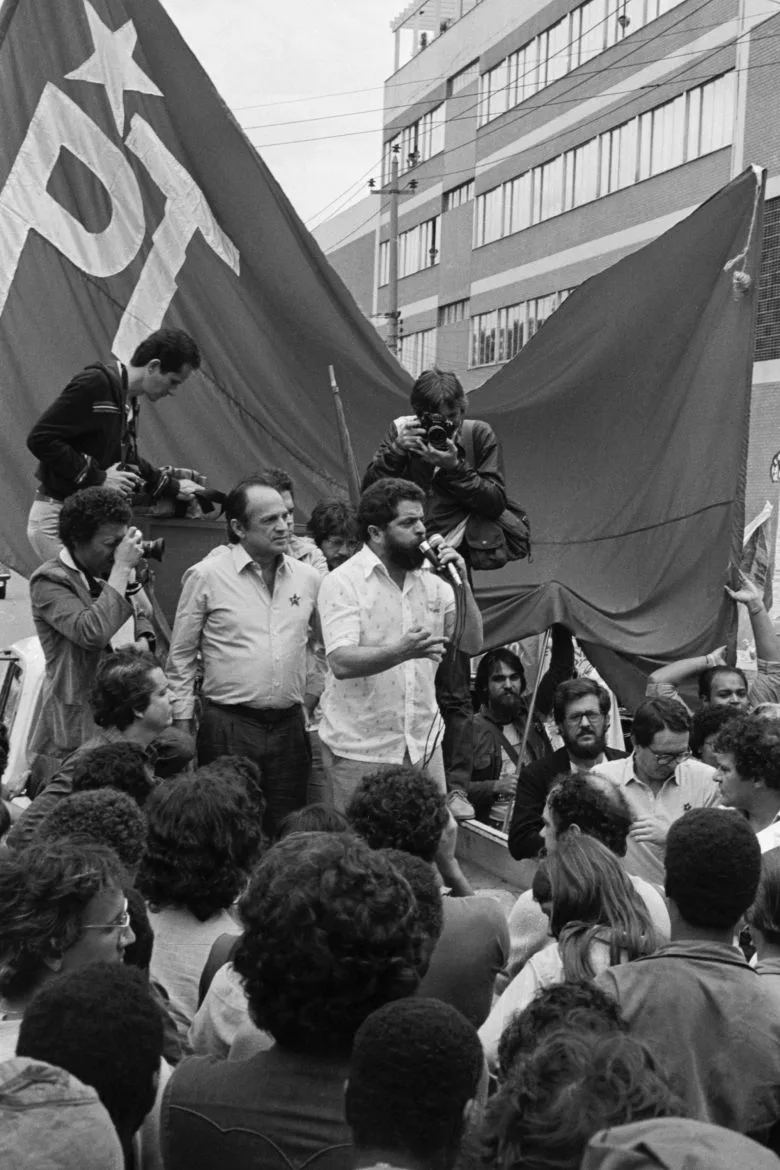
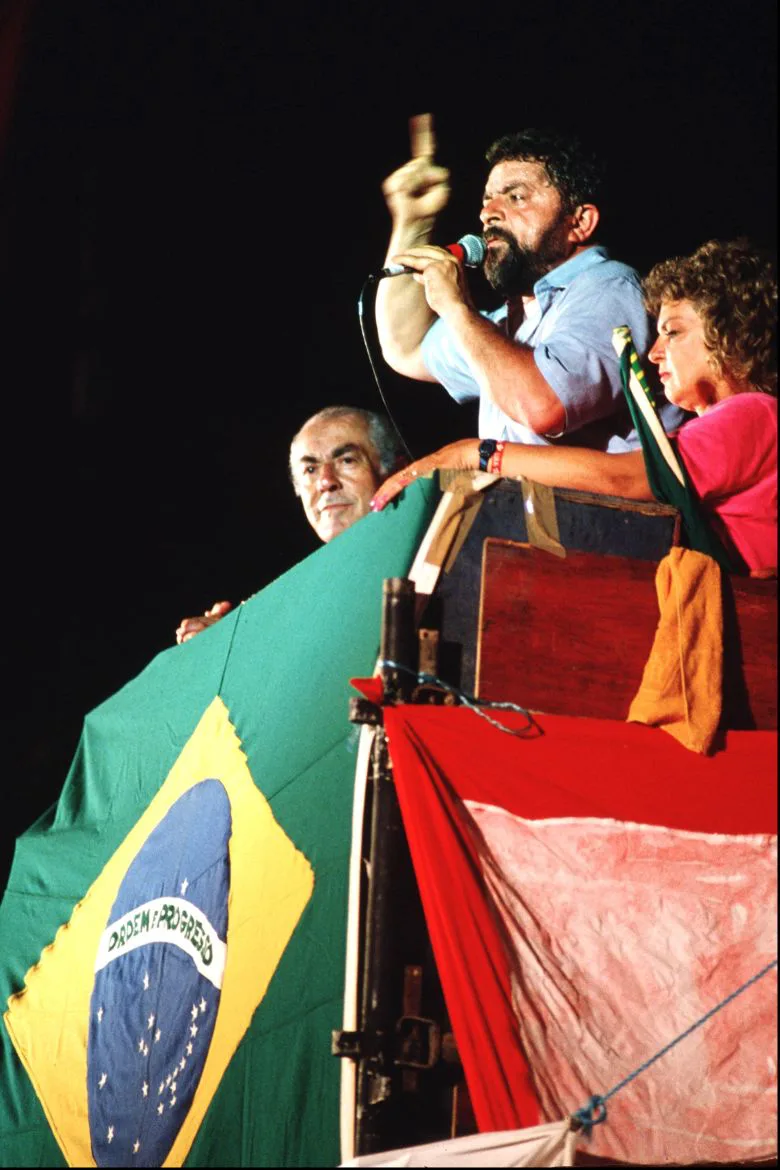
He entered the presidential race in 1989 and lost three consecutive elections, including those in 1994 and 1998.
Realising that his political strategy needed to change, Lula broadened his appeal ahead of the 2002 election. He built alliances beyond the traditional left, reached out to business leaders and adopted a more moderate tone.
The shift eventually paid off, and he won the presidency in 2002.
A legacy of social progress and corruption allegations
Lula’s ability to build alliances across political divisions has remained central to his leadership.
In 2022, he selected Geraldo Alckmin, a former centre-right politician who had previously contested the presidency against him, as his running mate. Alckmin is again part of his ticket in the current election.
Historian John French, who has studied Lula and Brazil’s labour movement for decades, said the president has a talent for bringing together competing interests while maintaining relationships with political opponents.
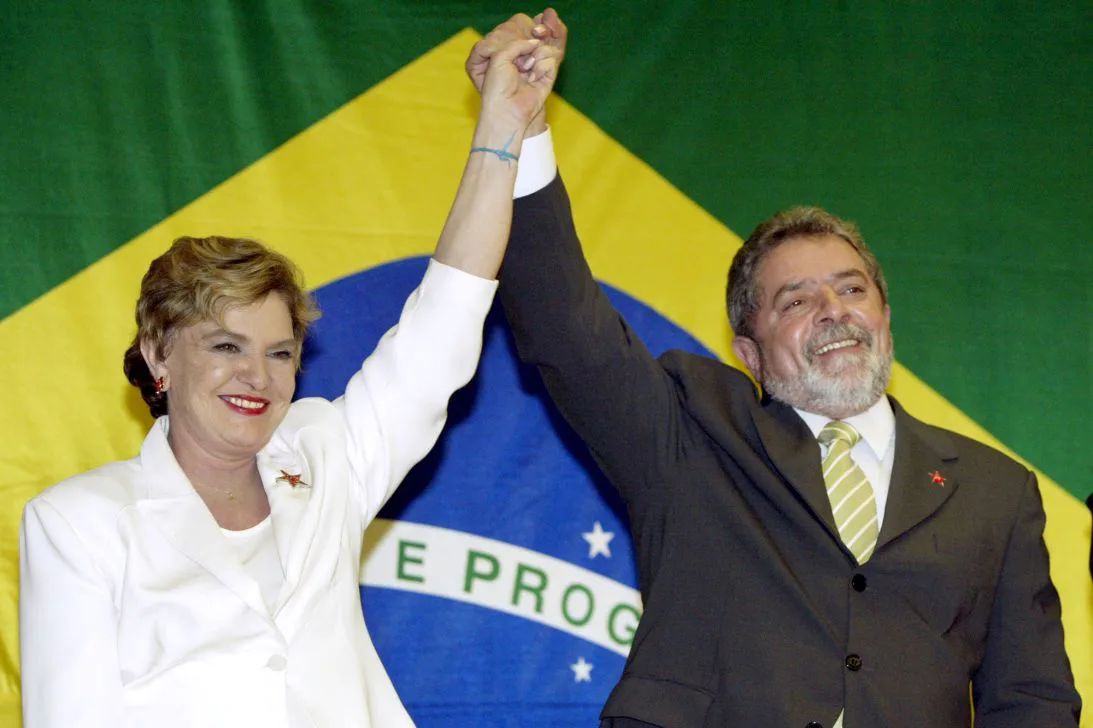
During Lula’s first two presidential terms, from 2003 to 2010, Brazil experienced rising employment, increases in the minimum wage and an expansion of purchasing power among lower-income households.
Millions of Brazilians escaped poverty, while greater numbers of lower-income and Black citizens gained access to universities and institutions traditionally dominated by wealthier groups.
Brazil was also removed from the United Nations’ hunger map for the first time in 2014, reflecting progress in efforts to address food insecurity.
Lula strengthened Brazil’s international standing as well, expanding relations with developing countries while maintaining ties with the United States and Europe. Brazil also helped establish the BRICS grouping alongside China, Russia, India and South Africa.
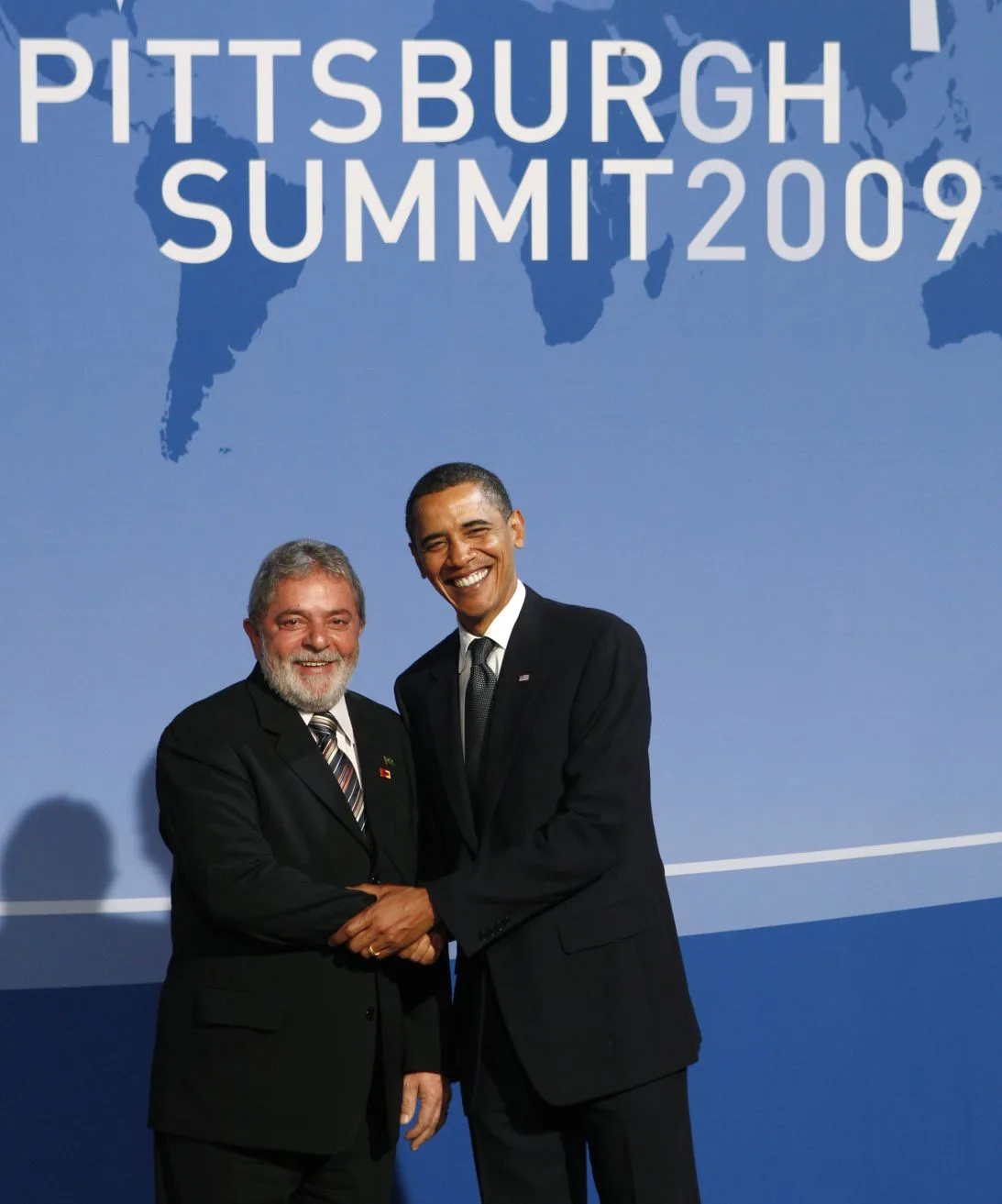
In 2009, then-US President Barack Obama praised Lula during a G20 meeting, calling him “the most popular politician on Earth.”
However, Lula’s political legacy has also been damaged by corruption scandals involving members of his party.
In 2005, the Mensalão vote-buying scandal resulted in the convictions of senior PT figures and undermined the party’s reputation for clean government.
A much larger investigation, known as Operation Car Wash, later uncovered a sprawling kickback scheme involving state-controlled oil company Petrobras. The scandal contributed to the political turmoil that culminated in the 2016 impeachment of Lula’s successor, Dilma Rousseff.
Political scientist Luciano Da Ros said corruption became closely associated with the PT and was increasingly used to explain Brazil’s economic difficulties.
Lula himself was convicted of corruption and money laundering in 2017 in a case involving a luxury beachfront apartment that prosecutors alleged had been offered to him by construction company OAS in exchange for political favours.
He denied wrongdoing. Brazil’s Supreme Court annulled the conviction in 2021, ruling that the Curitiba court lacked jurisdiction, restoring his political rights ahead of the 2022 election.
Lula subsequently defeated Jair Bolsonaro by a narrow margin of 1.8 percentage points, or approximately 2.1 million votes, in what was Brazil’s closest presidential election.
Despite Bolsonaro’s defeat, the conservative movement associated with his name has continued to attract significant support. Many of its followers view the PT as a symbol of corruption, while conservative politicians have increasingly adopted anti-corruption rhetoric traditionally associated with the left.
Da Ros has argued that corruption extends across Brazil’s major political parties rather than belonging exclusively to one side.
Fresh investigations create new challenges
As Lula campaigns for another term, fresh corruption investigations are creating additional difficulties for his government.
The collapse of Brazilian bank Banco Master has triggered scrutiny across the political establishment, including the Supreme Court.
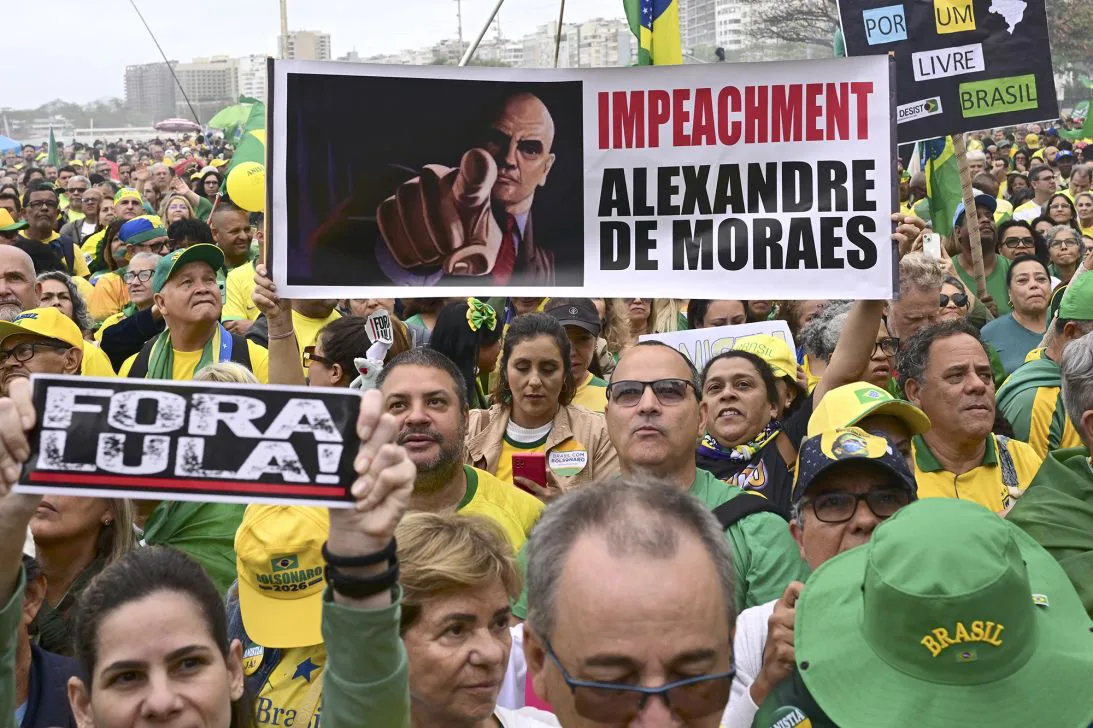
Supreme Court Justice Alexandre de Moraes, who frequently clashed with Jair Bolsonaro during his presidency and later oversaw investigations that led to Bolsonaro’s conviction, has faced questions over alleged connections to the bank’s president. Moraes has denied the allegations.
The controversy has provided Flávio Bolsonaro’s campaign with an opportunity to reinforce its argument that corruption extends throughout the left and institutions associated with Lula.
However, Flávio Bolsonaro himself is also reportedly under investigation over alleged links to the same bank.
Separately, Lula’s son, known as Lulinha, is being investigated over suspected influence-peddling.
These developments have intensified scrutiny of the political establishment at a time when voters are preparing to decide whether Lula should remain in office.
Tensions with Washington and a changing Latin America
Lula’s challenges extend beyond domestic politics.
Relations with the administration of US President Donald Trump have been strained by disputes over tariffs, trade practices, Brazil’s natural resources, organised crime and the country’s digital payment system, PIX.
The United States imposed additional tariffs on Brazilian goods in 2026, including a 25% levy on certain products, citing what it described as unfair trade practices.
Lula rejected the allegations and continued negotiations with Washington while placing greater emphasis on Brazil’s national sovereignty.
Addressing the United Nations General Assembly in September, he declared: “Brazil doesn’t fit in nobody’s backyard.”
At the same time, Brazil has strengthened its economic ties with China and other BRICS members.
Brazilian exports to China reached $58.3 billion in the first half of 2026, more than three times the $17.4 billion sent to the United States during the same period. Brazilian exports to the US also declined by 13% as tariffs affected trade.
Closer to home, Lula faces a Latin American political landscape increasingly shaped by right-wing leaders.
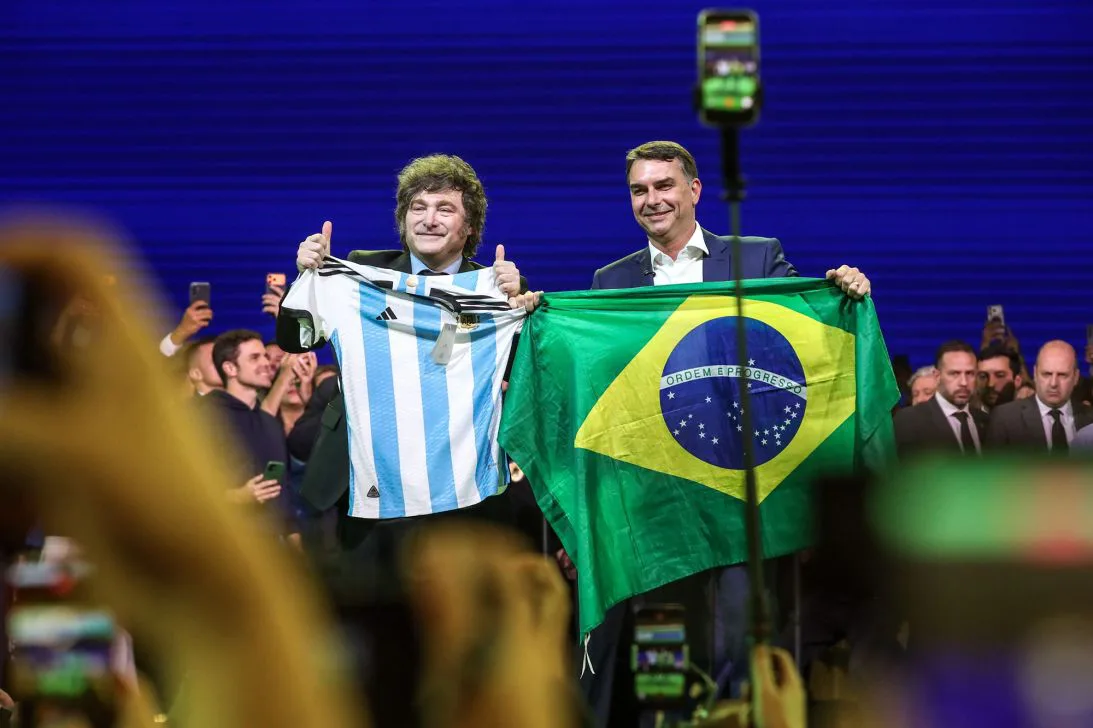
In July, Argentine President Javier Milei travelled to Brazil to campaign alongside Flávio Bolsonaro, describing Lula as a “convict” and his government as “thieving socialists.” The comments prompted Brazil to recall its ambassador from Argentina.
The political shift across the region presents another challenge for Lula, whose international influence has traditionally been built around cooperation among developing nations and progressive governments.
Economic concerns weigh on Lula’s support
Despite low unemployment and easing inflation, economic frustration is weighing on voters’ perceptions of Lula’s government.
During his first two terms, a global commodities boom helped drive economic growth, raise wages and expand employment opportunities. Today, however, the economic environment is different, and rising everyday expenses have weakened support among parts of his traditional voter base.
For many Brazilians, the election is not simply a choice between competing political ideologies. It is also a decision about household finances, personal security and confidence in the country’s institutions.
A further Lula victory would come at a time of growing rivalry between the United States and China, Brazil’s largest trading partner, as well as continuing conflicts in Europe and the Middle East and mounting tensions over global commerce.
These international pressures could shape the next administration’s economic and diplomatic priorities.
A political movement without a clear successor
Even if Lula wins another term, the Workers’ Party faces a longer-term challenge: finding a successor capable of maintaining the political coalition he has built over decades.
French argues that younger Brazilians have grown up with Lula as a constant presence in national politics.
His distinctive voice, beard, missing finger and familiar speaking style have become enduring features of Brazilian public life since the country returned to direct presidential elections in 1985.
Beyond his personal image, Lula has built an emotional connection with voters whose lives improved during his earlier presidencies.
French identifies social inclusion as one of Lula’s most significant achievements, particularly for people who previously lacked access to formal employment, financial services and other opportunities.
Kotscho believes Lula’s combination of political instinct, personal charisma and adaptability makes him difficult to replace.
“A guy like Lula, you don’t create, he’s unique,” Kotscho said. “These types only appear every 100 years.”
Whether those qualities will be enough to secure another presidential victory remains uncertain.
As Brazil approaches Sunday’s runoff, Lula faces a formidable combination of a resurgent Bolsonaro movement, renewed corruption allegations, economic dissatisfaction and a shifting regional political landscape.
The result will determine not only who governs Brazil next, but also whether Lula’s decades-long political comeback can withstand one more decisive electoral test.